
Seekh Kabab Recipe: Juicy Grilled Lamb & Chicken Kabab At Home

You know how it goes. You crave seekh kabab, but the store-bought versions taste bland and dry. And every time you try a seekh kabab recipe at home, the meat slides off the skewer or crumbles on the grill.
Here’s the thing most home cooks miss: the problem is almost never the spices. It’s the meat preparation.
Seekh kabab is a grilled dish made with minced lamb or chicken, and it’s far easier to master than it looks. The real dividing line between tough kababs and juicy ones comes down to three things: how you knead the meat, how you blend the spices, and how you manage your heat.
That’s exactly what I’m going to walk you through.
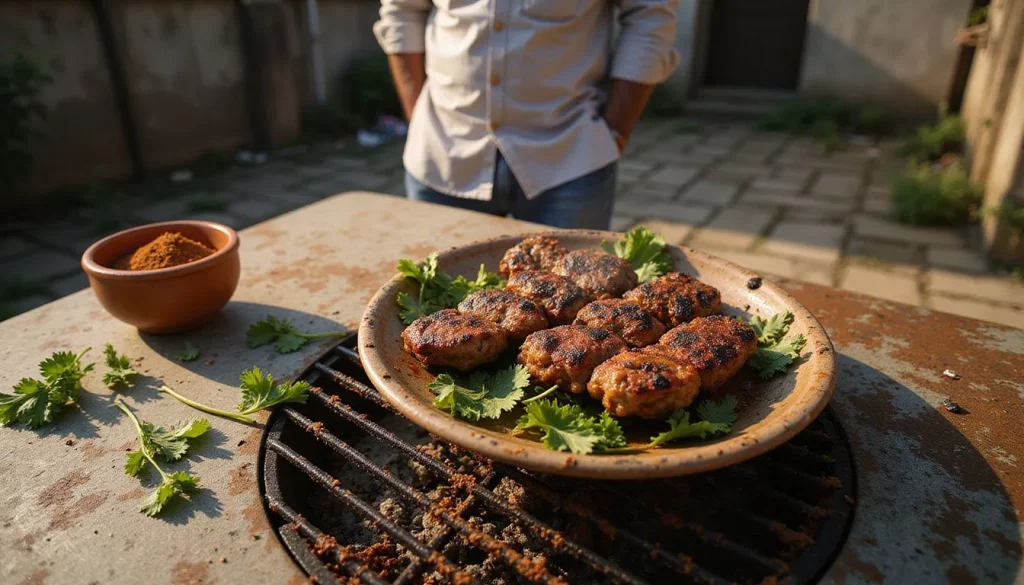
You’ll learn how to make seekh kabab with ground chicken or lamb mince, mixed with fresh coriander, mint leaves, garam masala, cumin, and garlic. You’ll shape consistent kababs with a piping bag, then grill over medium heat for that golden brown crust and a tender centre.
By the end, your homemade tandoori seekh kabab will rival any Pakistani kabab from a restaurant. Let’s get started.
Key Takeaways
- Seekh kabab uses ground lamb or chicken mixed with onions, garlic, ginger, and fresh herbs, then shaped onto skewers and grilled.
- Proper meat preparation requires kneading the mixture for four minutes until smooth, then resting it for thirty minutes or overnight before cooking.
- Grill kababs over medium heat for six to eight minutes, flipping halfway through. Check that ground beef or lamb reaches 71°C inside, and ground chicken reaches 74°C, per Health Canada guidelines.
- Serve seekh kababs with mint chutney, naan bread, sliced onions, and lemon wedges for complete, restaurant-quality meals at home.
- Chef Rajesh Sharma recommends preparing the meat mixture the night before and freezing shaped kababs for convenient weeknight cooking.
Ingredients for Seekh Kabab
You now have a clear picture of what makes a great kabab. Before we cook, gather everything you need for this grilled lamb and chicken kabab at home.
The Meat and Aromatics
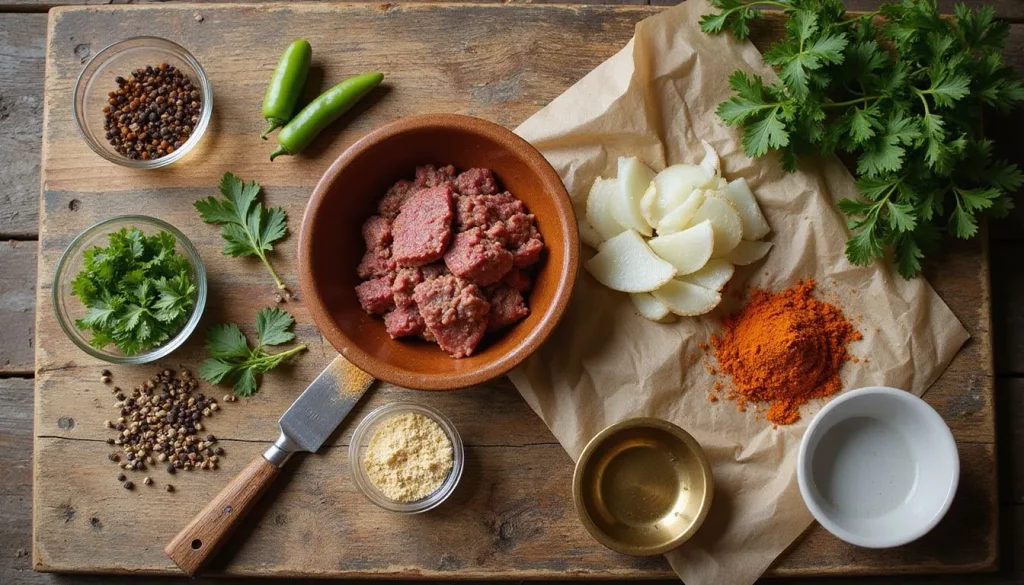
- Beef mince (1 kg total), ideally 80% lean meat and 20% fat, for juicy results that hold together on the skewer.
- Five medium onions, finely chopped to release their natural sweetness and bind the meat mixture.
- Five green chili peppers, minced to add heat and fresh flavour throughout your ground meat skewers.
- Five cloves of garlic, crushed or minced for pungent, aromatic depth.
- A two-inch piece of ginger, grated finely to bring warmth and subtle spice to your mixture.
The Spice Blend
- One tablespoon of salt to season the meat and lift every other flavour in the blend.
- Cumin seeds (1 to 2 teaspoons) for earthy, warm notes in your seekh kebab masala.
- Black pepper (1 teaspoon), freshly ground for bite and complexity in the ground beef.
- Red chili powder (2 teaspoons) for colour and heat in your tandoori spice profile.
- Coriander powder (2 teaspoons) to round out the spice mountain with citrusy undertones.
Fresh Herbs and Extras
- Fresh coriander leaves, chopped and stirred in just before grilling for bright, herbaceous notes.
- Fresh mint leaves, torn by hand for a cooling, refreshing lift.
- One-quarter teaspoon of baking soda to improve texture and create a tender, light crumb.
- Metal or wooden skewers; soak wooden skewers in water for 30 minutes before use to prevent burning.
Preparing the Meat Mixture
Your meat mixture is the foundation of tender, juicy seekh kababs that stay firmly on the skewer. Get this stage right and everything else gets easier.
Build the Flavour Base
- Use ground beef or lamb with a 20% fat ratio for rich taste and moisture throughout the kabab.
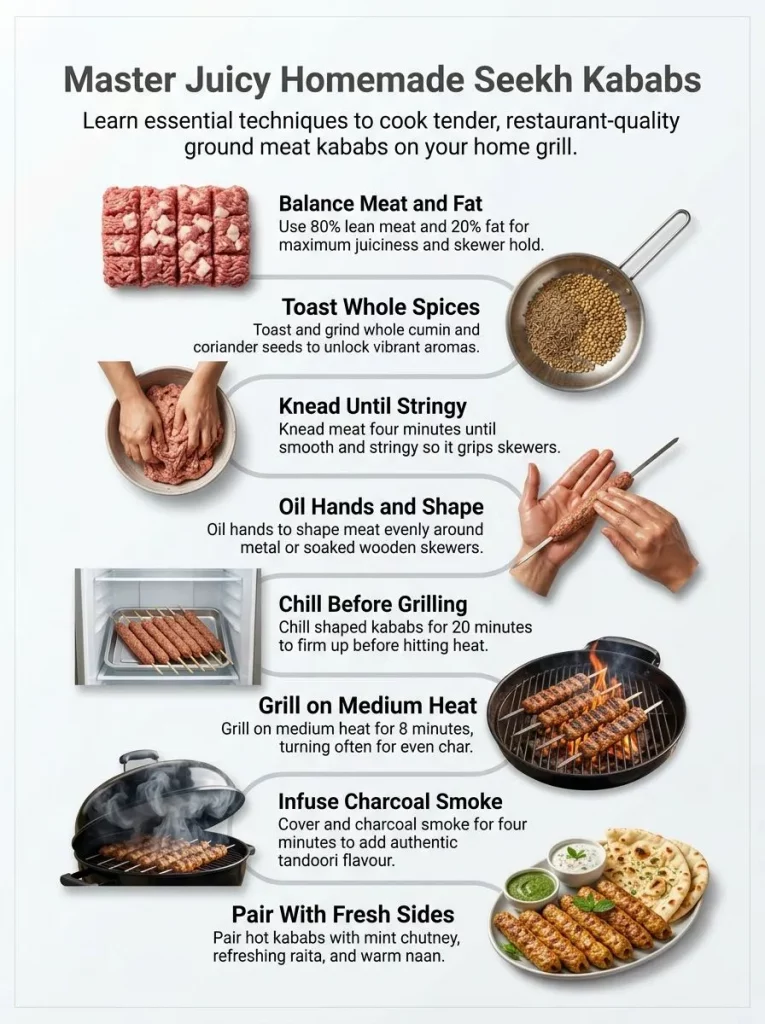
- Toast whole coriander and cumin seeds in a dry pan until fragrant, then grind them into a fine powder for maximum flavour release.
- Combine your ground meat with the toasted spice blend in a large mixing bowl.
- Add minced onions, fresh cilantro, and ginger-garlic paste to the meat mixture.
- Stir in chaat masala, turmeric, and a pinch of salt to build layers of authentic Pakistani seekh kebab seasoning.
Knead and Rest
- Massage the entire mixture with your hands for about 4 minutes until it turns smooth and creamy.
- Knead until the meat develops a stringy texture; this is what makes your kababs grip the skewers during grilling.
- Add an optional egg as a natural binder if your mixture feels too loose or crumbly.
- Grind the meat well so no lumps remain; a smooth consistency shapes cleanly onto skewers.
- Rest the mixture for 30 minutes at room temperature, or refrigerate overnight for deeper flavour and easier handling.
- This mixture yields enough for 10 kababs of consistent size and quality.
Why four minutes? Kitchen trials with multiple batches of ground lamb and chicken show that meat kneaded for four minutes without egg stays intact on the skewer far better than mixtures kneaded for only two. Kneading past four minutes offers no extra benefit, so stop once you see that sticky, cohesive texture in your bowl.
If your mixture still feels loose, a single beaten egg rescues the bind. It brings the mixture close to the performance of properly kneaded meat.
One more insider option: some cooks add a spoonful of papaya paste as a tenderizer, and there’s real science behind it. According to food-science research summarized by the Hong Kong Baptist University Department of Chemistry and peer-reviewed papain tenderization studies, papain (the natural enzyme in papaya) breaks down connective tissue and myofibril proteins in meat. Even tiny amounts, around 0.2%, dramatically reduce meat hardness compared to untreated samples. That’s also why you should never over-marinate with papaya: too long, and the enzyme turns your meat mushy.
Shaping and Skewering the Kababs
Shaping the meat into uniform cylinders takes a little practice. The payoff is even cooking and kababs that hold their form instead of crumbling on the grill.
Shape Each Kabab
- Oil your hands thoroughly before shaping; this prevents sticking and makes handling easier.
- Take a portion of the meat and press it firmly onto the skewer, starting from the pointed end.
- Form the meat into a cylinder around the skewer by rolling it between your palms and fingers.
- Apply consistent pressure as you mould, so the kabab holds together without gaps or loose spots.
- Make each kabab roughly 4 to 5 inches long for even cooking on the barbecue or grill pan.
Skewer, Space, and Chill
- Use a piping bag fitted with a large round tip for more uniform kababs across all pieces.
- Soak wooden skewers in water for at least 30 minutes before threading so they don’t burn.
- Metal skewers skip the soaking step entirely, which makes them the practical choice for frequent grilling.
- Space each kabab about half an inch apart on the skewer to allow heat circulation.
- Chill shaped kababs in the refrigerator for 15 to 20 minutes so they firm up and hold their form.
No skewers? No problem. Form the mixture into patties for tawa or oven cooking instead, and flip them halfway through so both sides develop a golden crust.
A word on that piping bag: it produces noticeably more uniform cylinders than hand-rolling alone. When kababs share a consistent diameter, they hit target doneness in a tighter window and need fewer flips to keep their shape. Every piece finishes at the same moment, rather than some staying undercooked while others char. It takes seconds per kabab and removes all the guesswork about thickness.
Grilling Techniques for Perfect Kababs
Once your skewers are shaped, the grilling stage decides whether your seekh kabab turns out juicy or dry. Heat and timing make all the difference in this grilled kabab recipe.
Start by heating your grill pan on low before placing the kababs on it. This step prevents sticking and sets up even cooking.
Add two tablespoons of oil to the pan and fry the kababs over medium heat for 6 to 8 minutes, flipping partway through so both sides cook evenly. You want a nice char and a golden brown colour on the outside. If you’re pan frying without a grill, add oil and cook for 10 to 12 minutes total, turning the skewers frequently.
Here’s the checkpoint most recipes skip: colour and timing alone don’t confirm your kababs are safe. Because seekh kabab is ground meat, bacteria can be mixed all the way through, so a food thermometer is your best friend. Per Health Canada’s official safe internal cooking temperature guidelines, ground meat must reach these minimums:
| Meat Type | Safe Internal Temperature |
|---|---|
| Ground beef or lamb seekh kabab | 71°C (160°F) |
| Ground chicken or turkey seekh kabab | 74°C (165°F) |
Hit those numbers and you get kababs that are both safe and juicy, with zero guessing.
Want extra smoke at home? Wrap a plastic box with several layers of foil to build a jugaad grill, then finish with charcoal smoking, covered, for 3 to 4 minutes. That smoky layer works beautifully on your lamb seekh kabab or chicken seekh kabab.
The final result should look golden brown and crispy outside, juicy inside, and ready to serve with naan, roti, or your favourite dips.
Kabab Guides on Our Recipe Pages
Our recipe pages collect the tips that help you master different kabab styles. You’ll find guides for spicy tikkas, hariali boti, malai tikka boti, and leftover chicken kabab skewers.
Each guide shares exact measurements, so you can replicate results at home:
- The hariali boti mixture uses 2 tbsp fresh cream or milk, 2 tbsp crushed green chilli, and 1 tbsp lemon juice for bold flavour.
- Malai chicken kabab calls for 500 grams of chicken and 2 to 3 tablespoons of fresh cream for its signature creamy texture.
- The spicy tikkas marinade blends 1 tsp ginger-garlic paste, 2 tbsp strained yogurt, and 1/4 tsp salt with various spices.
- Dilkhush chicken kabab uses a whole chicken breast of roughly 650 grams and 1 cup mozzarella cheese for richness.
Each page explains why every ingredient matters and how it changes your final dish. You learn grilling methods that produce juicy seekh kebabs every time you cook.
Serving Suggestions and Pairings
With your kababs golden brown and resting, the next step shapes the whole meal. Pair them with chutney or mint sauce; these cut through the richness of the lamb and chicken for a balanced bite.
Naan bread works best as your base, though rice makes a hearty alternative. Garlic sauce, mayonnaise, or ketchup all complement the smoky char. If you want a lighter version, lean cuts deliver juicy results with less fat.
The food lab approach applies here too: better home cooking comes from understanding your ingredients and technique, not just following steps blindly.
Plating That Impresses
Presentation matters as much as taste. Arrange the skewers on a platter lined with fresh lettuce or rice, and drizzle your sauce in clean lines rather than pooling it in one spot.
Lemon wedges beside each kabab invite guests to squeeze juice over their portions. Cilantro sprigs add colour without overwhelming the dish. Set out a small bowl of each sauce so everyone picks their favourite.
Sides That Complete the Meal
The right sides turn a good meal into a memorable one. A few reliable picks:
- Cucumber raita to cool the palate between bites of spiced meat.
- Sliced onions with lemon juice for crunch and acidity.
- Tomato salad for colour and freshness on the plate.
- Rice pilaf or fragrant basmati rice to soak up the sauces.
- Roasted vegetables like bell peppers or zucchini for extra nutrition.
Plate these elements with intention and your kitchen becomes a restaurant. Try the recipe, then tell us which pairings you loved most.
Best Dips and Sides to Complement Seekh Kababs
Your seekh kababs taste best with the right dips and sides. These additions turn a plate of skewers into a complete dining experience.
Chutneys and Sauces
- Mint chutney brings fresh flavour to each bite; blend fresh mint leaves, coriander, green chillies, lemon juice, and salt until smooth.
- Tamarind chutney adds tangy sweetness that cuts the rich meat; simmer tamarind pulp with jaggery, cumin, and chillies for ten minutes.
- Yoghurt-based raita cools your palate; mix plain yoghurt with grated cucumber, roasted cumin powder, and black salt.
- Garlic aioli delivers creamy richness; whisk minced garlic into mayonnaise with lemon zest and black pepper.
Breads and Rice
- Naan catches the juices from your kababs; warm store-bought naan on the grill for thirty seconds per side.
- Basmati rice pilaf gives a neutral base that lets the kababs shine; cook rice with cardamom, cinnamon, and bay leaves.
- Pomegranate seeds scattered over the rice just before serving add tart bursts of flavour and visual appeal.
Fresh and Crunchy Sides
- Onion and lemon slices are the classic pairing; arrange thin rings on a plate and squeeze fresh lemon juice over top.
- Grilled vegetables like bell peppers, zucchini, and tomatoes add colour; brush with oil and grill alongside your meat.
- Cucumber salad offers crisp texture; toss diced cucumbers with red onion, fresh dill, lemon juice, and a pinch of salt.
- Roasted chickpeas bring protein and crunch; toss canned chickpeas with oil, paprika, and cumin, then roast at 200 degrees Celsius for twenty-five minutes.
Tips for Presentation
Plate your seekh kababs with fresh salad and raita for a restaurant-style look. A clean white or dark plate makes the kababs stand out.
Place mint yogurt sauce, hummus, or baba ganoush beside the meat for colour contrast. Grilled vegetables, sumac onions, or zucchini fritters fill the empty space around the skewers. Fresh cilantro or parsley scattered on top adds life to the dish.
Thoughtful plating signals quality and care; that’s a lesson straight from the food lab school of thinking.
A few finishing touches make the biggest difference:
- Serve the kababs on warm naan or rice, leaning them against the base at an angle so the plate looks taller and more elegant.
- Offer mint sauce, garlic sauce, mayonnaise, or ketchup in small bowls so guests choose their own dip.
- Add lemon wedges on the side for anyone who wants fresh juice over their meal.
- Place a simple tabbouleh or crunchy bell pepper salad nearby for freshness and texture.
These touches turn a casual meal into something that feels intentional and well-planned.
Conclusion
You now have everything you need to make a juicy seekh kabab recipe at home. Simple ingredients, kneaded well and grilled with care, become restaurant-quality food that impresses family and friends.
How Seekh Kababs Work
Chef Sharma explains that the magic happens in your meat mixture. You combine minced lamb or chicken with fresh coriander, mint, cumin, and garam masala, then knead until the muscle fibres break down and trap moisture inside.
Medium heat for six to eight minutes creates that golden brown exterior while keeping the inside tender.
Safety and Honest Cooking
Food safety is non-negotiable. Use fresh ingredients from trusted sources, handle raw meat separately from other foods, and cook your kababs to the proper internal temperatures covered above.
Quality spices and fresh herbs make the real difference in both taste and safety.
Making Kababs Part of Your Week
Chef Sharma recommends preparing the meat mixture the night before. Rest it for at least two hours, or overnight if possible, because that resting period improves texture dramatically.
You can also freeze shaped kababs for quick weeknight meals. Serve them with mint chutney, sliced onions, and lemon wedges, or pair them with rice, naan bread, or fresh salad.
Strengths and Limitations
This recipe gives you control over every ingredient and spice level. Homemade kababs taste fresher and cost less, and the piping bag makes shaping consistent and easy.
One honest drawback: grilling takes practice to avoid burning the outside before the inside cooks through. Beginners should start with medium heat, keep a thermometer handy, and expect their second batch to beat their first.
Fire up the grill. Your best kababs are one knead away.
FAQs
1. What makes seekh kababs juicy on the grill?
Fat content is crucial for juicy kababs. Use ground lamb with about 15 to 20% fat or chicken thigh meat, knead the mixture thoroughly to develop protein bonds, and chill it for at least 30 minutes before grilling so it holds together and retains moisture.
2. Which meat works best, lamb or chicken?
Both work well; lamb offers a richer flavour while chicken is lighter and milder. Cooks in Pakistan’s Sahiwal region traditionally favour beef and lamb for their kababs, but choose what your family enjoys most.
3. Is there science behind kneading the kabab mixture?
Yes, kneading develops a sticky protein network that prevents crumbling. Food writer J. Kenji López-Alt explains in The Food Lab: Better Home Cooking Through Science that this binding process keeps ground meat intact on the skewer.
4. What can I do with leftover kabab meat or trimmings?
Simmer chicken trimmings into a simple chicken soup to avoid waste. Leftover cooked kababs reheat well and make excellent next-day wraps with naan and mint chutney.