
Tikka Masala vs Butter Chicken: Key Differences Explained
If you have ever looked at an Indian food menu and felt confused about the difference between butter chicken and chicken tikka masala, you are not alone. Both dishes show up on almost every menu, and both come in a similar orange-red sauce. Because they look so much alike, it is easy to order one and expect the other.
These two chicken curries are popular parts of Indian cuisine, but they are not the same dish. They use different cooking steps and have their own flavour profiles. Knowing what makes each curry different can help you pick the right dish for your taste, whether you want something creamy and mild or bold and spiced.
Key Takeaways
- Butter chicken and chicken tikka masala look similar but are separate dishes with their own flavours and cooking styles.
- Knowing the differences between these Indian curries can help you choose a dish that matches your taste and spice preference.
- Local Indian restaurants often prepare both curries in-house, giving you a chance to compare them side by side.
Quick Answer
Both dishes look similar, but they’re made differently.
Butter chicken is mild and creamy. The chicken cooks right in a sauce made with butter, cream, and tomatoes, giving it a smooth, slightly sweet taste.
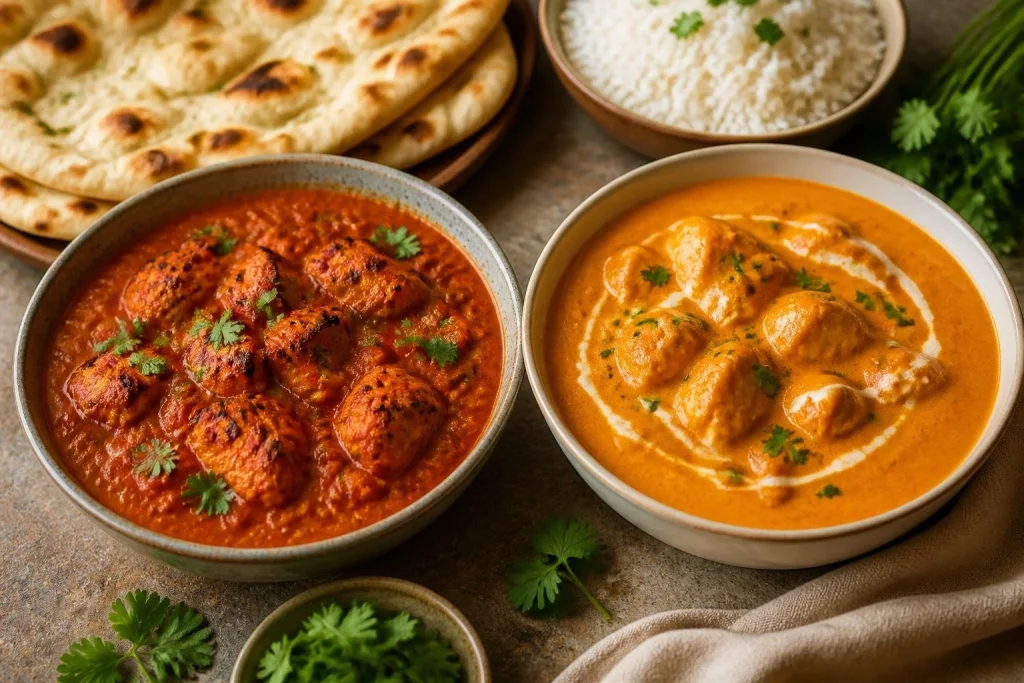
Tikka masala works in two steps. First, you marinate chicken in yogurt and spices, then grill it. After that, it goes into a spiced onion-tomato sauce, which gives it a bolder, tangier flavour with a bit of smokiness.
Choose based on what you want:
- Milder and creamier → butter chicken
- Bolder with more texture → tikka masala
What is Butter Chicken?
Butter chicken, also called murgh makhani, came from Delhi in the 1950s. You can trace it back to a restaurant called Moti Mahal, where a chef named Kundan Lal Gujral wanted to solve a simple problem. At the end of the night, he had leftover tandoori chicken that was starting to dry out. His answer was to simmer the chicken in a sauce made of tomatoes, butter, and cream, which brought moisture and richness back into the meat. Diners at Moti Mahal restaurant liked the sauce so much that it became its own dish, not just a way to save extra chicken.
When you make butter chicken, you’re working with a few key ingredients: plenty of butter (sometimes ghee too), heavy cream, tomato purée, and a mild spice blend. This usually includes garam masala, a small amount of chili, ginger, and garlic. Many cooks also add kasuri methi, which is dried fenugreek leaves, to give the sauce a subtle, slightly sweet aroma. Unlike some other curries, you cook the chicken right in the sauce instead of preparing it separately first.
Here’s what you can expect from the finished dish:
- Smooth texture – the butter-based sauce has no chunks or char, just a silky consistency
- Low heat level – you get flavour and comfort more than spice
- Slight sweetness – from the butter, cream, and sometimes a bit of sugar
- Orange-red colour – lighter and more even than similar dishes
You’ll often find butter chicken recommended as a starting point if you’re new to northern India’s cuisine, and it remains one of the most popular Indian dishes on menus across North America.
What Is Chicken Tikka Masala?
Chicken tikka masala has a history that’s harder to pin down than butter chicken’s.
Many people trace it back to a restaurant kitchen in Glasgow, Scotland. The most common story credits a Pakistani-born chef named Ali Ahmed Aslam, who worked at the Shish Mahal restaurant. As the story goes, a customer complained that their chicken tikka was too dry. In response, Aslam mixed in tomato soup, cream, and spices to create a sauce. This happened sometime in the 1970s.
Not everyone agrees with this version of events. Some food historians say similar tomato and cream chicken dishes already existed in the Punjab region of India. They believe the dish grew slowly, as immigrant chefs in the UK adjusted their recipes to suit local tastes for milder, saucier curries.
However it started, chicken tikka masala became a major part of British food culture. In 2001, a UK government official called it Britain’s national dish during a public speech.
The cooking method sets this dish apart from butter chicken. You start by marinating boneless chicken in plain yogurt, along with ginger, garlic, and spices. The chicken is then placed on skewers and cooked in a tandoor, or grilled, until it develops a light char.
Once the chicken is cooked, you add it to a separate sauce. This sauce, called masala, is made with onions, tomatoes, and either cream or yogurt. It also includes a bold mix of spices such as cumin, coriander, paprika, and extra garam masala. A squeeze of lemon sometimes brightens the final result.
This cooking process gives the dish some clear traits:
- Texture: You can see and taste distinct pieces of grilled chicken
- Flavour: The taste is bold and tangy, with a strong tomato presence
- Aroma: A light smokiness comes from grilling or tandoor cooking
- Colour: The sauce ranges from deep red to reddish-brown, with less uniformity than butter chicken’s sauce
Taste the Himalayas — Right Here in Regina
You don’t need a plane ticket to enjoy real Nepalese and Indian food. At Little Nepal Cuisine, you get bold curries, warm momos, and dishes with true Himalayan roots.
You can also try Hakka and Vietnamese options on the same menu. Here’s what you can choose from:
- Dine-in: Sit down and enjoy a full meal
- Takeout: Grab your order and go
- Delivery: Get food brought right to your door
- Catering: Book meals for private events or special occasions
Each dish is made with care, so you get real flavour in every bite.
Butter Chicken vs. Tikka Masala: Key Differences
Once you know what to look for, telling these two curries apart gets a lot easier. Here’s how they compare across taste, sauce, spice, and cooking style.
| Feature | Butter Chicken | Chicken Tikka Masala |
| Taste | Mild, creamy, slightly sweet | Bolder, tangier, a bit smoky |
| Sauce Base | Tomato purée, butter, cream | Tomato, onion, yogurt or cream, whole spices |
| Spice Level | Low to mild | Mild to moderate |
| Cooking Method | Chicken cooked right in the sauce | Chicken grilled first, then added to the sauce |
| Texture | Smooth and velvety | Chunkier, with charred edges |
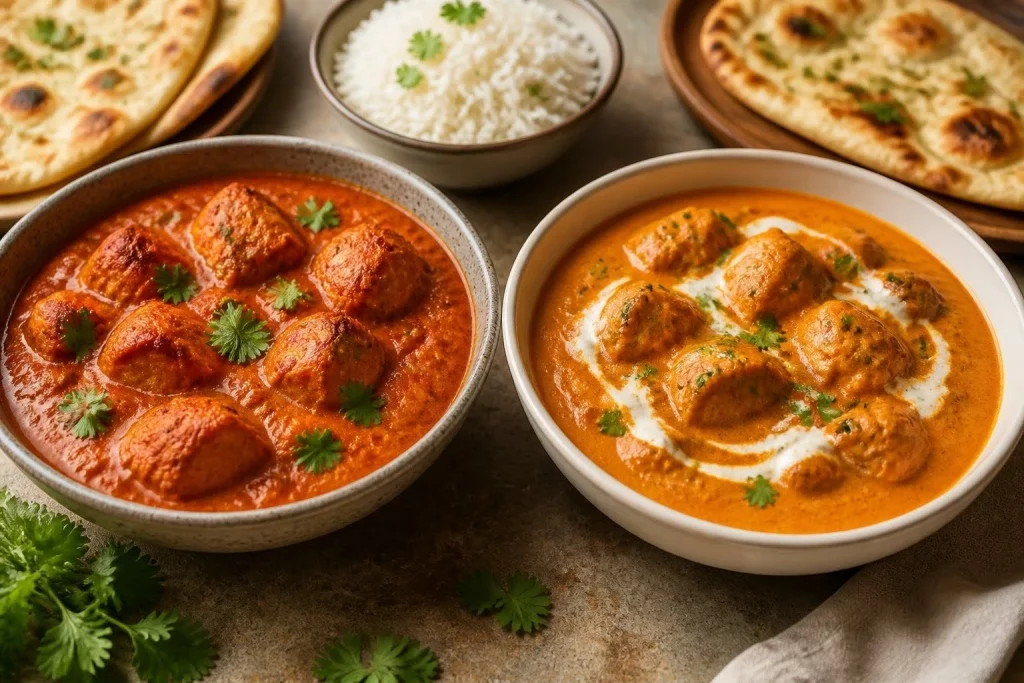
| Colour | Orange-red | Deep red to reddish-brown |
Taste & Flavour Profile
Butter chicken is built for comfort. Cream and butter soften the tartness of the tomatoes, and the spice blend stays light so nothing competes with the rich, creamy texture. You’ll pick up gentle notes of garlic, ginger, and a touch of garam masala, but nothing that overwhelms your palate.
Tikka masala keeps more bite. The tomato flavour comes through stronger, and the spice blend runs deeper, often bringing in cumin, coriander, and paprika. The grilled chicken adds a smoky flavour that butter chicken simply doesn’t have. If you try both dishes side by side, tikka masala will usually taste like the bolder option.
Sauce Base Comparison
Butter chicken’s sauce stays fairly simple. You’re mainly working with tomato purée, tomatoes, butter, cream, and a light spice mix. Some recipes add cashews to give the sauce more body and a slightly nutty finish. The result is a smooth tomato-cream sauce with a rounded, mellow taste.
Tikka masala’s sauce takes more steps to build. It usually starts with sautéed onions as a base, then tomato sauce or tomato paste, yogurt or cream, and a wider mix of whole spices toasted before everything comes together. This gives you a heartier, tomato-based sauce that’s meant to stand up to the charred chicken rather than blend it into the background.
Spice Level
Neither dish is meant to be hot, but there’s still a gap between them. Butter chicken sits on the milder end, which makes it a safe choice if you’re sensitive to spice or cooking for kids.
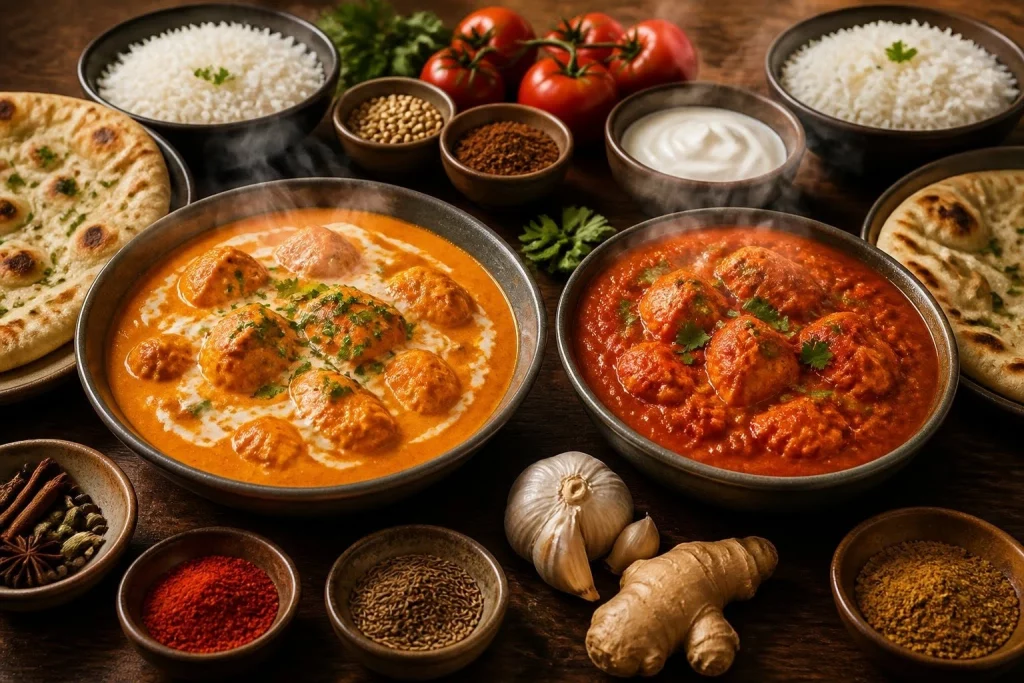
Tikka masala sits a step above it. It’s still not a spicy dish by most standards, but it carries a more assertive spice blend, often built on chili powder, cayenne, or kashmiri chili in small amounts alongside warming spices like cardamom and cloves.
Cooking Method
This is the clearest way to spot the difference in the kitchen. For butter chicken, boneless chicken usually goes straight into the simmering sauce, either raw or lightly cooked beforehand.
Tikka masala adds an extra step. The chicken gets marinated, then grilled or roasted on its own at medium heat until it picks up a smoky flavour and slightly charred edges. Only after that does it get folded into the masala sauce.
Colour Difference
Because butter chicken’s sauce relies heavily on cream and butter, it tends to look lighter, with a smooth, even orange colour throughout.
Tikka masala uses less dairy and more tomato and spice, so it usually comes out a deeper red or reddish-brown. You’ll also notice visible pieces of tender chicken with charred edges, rather than one smooth, creamy sauce.
Which One Is Healthier?
Neither curry counts as a light meal, and the exact nutrition numbers depend heavily on how each kitchen prepares them. A typical serving of either dish usually falls between 450 and 600 calories, and you’ll find the protein content is fairly similar since both rely on chicken as the main ingredient.
The real difference shows up in fat content. Butter chicken gets most of its calories from butter and heavy cream, which raises its saturated fat levels. Tikka masala starts off leaner, since the chicken is grilled instead of cooked directly in fat, but its sauce can still contain cream or yogurt, so the gap between the two isn’t as large as you might expect.
Your choice of chicken cut matters too. Boneless chicken thighs tend to stay juicier and carry more fat than chicken breast, so recipes using thigh meat will naturally run higher in calories.
If you want a lighter version, try these swaps:
- Ask for sauce on the side
- Request less cream
- Choose chicken breast over chicken thighs
- Pair your curry with plain rice instead of naan
Which One Should You Order?
Your choice depends on your mood and spice comfort level.
Pick butter chicken if you:
- Want a mild, creamy dish
- Are new to Indian restaurants
- Prefer something safe and familiar
Pick chicken tikka masala if you:
- Want bolder flavour with some heat
- Like the smoky taste of grilled chicken
- Already enjoy Indian spices
| Pairing | Best With |
| Butter chicken | Garlic naan, plain naan, or basmati rice |
| Tikka masala | Roti, naan bread, or steamed rice |
| Either dish | Raita or a mango lassi to cool your palate |
If you can’t decide, order both and share. They taste different enough that having them side by side won’t feel repetitive. Add a side of paneer or tofu for a vegetarian option, and a lassi to round out the meal.
Butter Chicken & Tikka Masala at Little Nepal Cuisine, Regina
You can try both dishes made fresh at Little Nepal Cuisine, located at 141 Albert St N in Regina.
Butter chicken here follows a classic style. The chicken simmers in a sauce made of tomato, butter, and cream. The spice level stays low, so the flavour is mild and smooth.
Tikka masala takes a bolder approach. The chicken is marinated in yogurt and spices first, then grilled to get some char. After that, it gets mixed into a spiced tomato and onion sauce. This gives it a tangier, stronger taste.
You have a few ways to enjoy either dish:
- Dine in at the restaurant
- Order takeout
- Get it delivered to your door
The restaurant is open from Wednesday to Monday, 11:00 a.m. to 10:00 p.m. It’s closed on Tuesdays.
If you want to see more options, you can check out the full menu. This includes other Nepalese, Indian, Hakka, and Vietnamese dishes. You can also book a table ahead of time or order online for delivery.
Frequently Asked Questions
Are butter chicken and chicken tikka masala the same dish?
No, they are not. Both use a tomato-based sauce with mild spices, but they are made in different ways. You cook butter chicken directly in a sauce made of butter, cream, and tomato. Chicken tikka masala starts with grilled, marinated chicken that you then add to a separate onion-tomato sauce.
Which one has more spice, butter chicken or tikka masala?
Chicken tikka masala usually has more spice than butter chicken. Both dishes stay in the mild-to-moderate range compared to other Indian dishes. If you want something creamier and milder, butter chicken is your better choice.
Where did butter chicken come from?
You can trace butter chicken back to Delhi in the 1950s. Chef Kundan Lal Gujral created it at Moti Mahal restaurant. He came up with the recipe to use leftover tandoori chicken, simmering it in a butter, tomato, and cream sauce so it wouldn’t dry out.
What flavour can you expect from chicken tikka masala?
You’ll notice a tangy, smoky taste with a moderate spice level. The sauce has a bolder tomato and onion base than butter chicken. You’ll also see chunks of grilled chicken with slightly charred edges.
What spices go into butter chicken?
Butter chicken usually includes:
- Garam masala
- Ginger and garlic
- A small amount of chili
- Kasuri methi (dried fenugreek leaves)
These spices blend with butter, cream, and tomato purée to make the sauce.
Is butter chicken a healthy choice?
Butter chicken gives you a good amount of protein, but it’s also higher in saturated fat because of the butter and cream. A typical restaurant serving has about 450 to 550 calories, depending on how it’s made and how much you get.
How is chicken tikka different from chicken tikka masala?
Chicken tikka is just the marinated, grilled chicken by itself, with no sauce. Chicken tikka masala takes that same grilled chicken and mixes it into a spiced tomato-onion sauce.
Final Thoughts
Butter chicken and chicken tikka masala may look alike, but they are built in different ways. Butter chicken is simmered in a mild, creamy sauce that gives you a comforting bite every time. Chicken tikka masala starts with grilled chicken, then gets coated in a tangier, spicier sauce with a bit more char.
Neither dish is better than the other. They just suit different cravings depending on what you are in the mood for.
The best way to figure out your favourite is to try them side by side. Head to Little Nepal Cuisine in Regina and order both curries for your table. You can:
- Dine in and compare them fresh off the stove
- Order online for delivery if you would rather enjoy them at home
Little Nepal Cuisine serves Nepalese, Indian, Hakka, and Vietnamese dishes. They are open Wednesday to Monday from 11:00 a.m. to 10:00 p.m., and closed on Tuesdays.
Frequently Asked Questions
What Sets Tikka Masala Apart From Butter Chicken?
The biggest difference comes down to the sauce base. Tikka masala uses a tomato-forward sauce with a sharper, tangier taste. Butter chicken relies on butter and cream to create a smoother, milder sauce.
Another difference is how the chicken gets prepared before it goes into the sauce. Tikka masala chicken is usually grilled or roasted first, which gives it a slightly charred taste. Butter chicken often skips this step or uses a lighter marinade.
Which Dish Has A Richer, Creamier Sauce?
Butter chicken wins this one. You’ll notice it has a thicker, silkier texture because of the extra butter and cream used in the recipe.
Tikka masala still has cream in it, but the tomato flavour stands out more. This gives it a lighter feel compared to butter chicken, even though both dishes look similar in colour.
Does Tikka Masala Have More Spice Than Butter Chicken?
Yes, tikka masala tends to bring more heat to your plate. It often includes stronger spices like chili powder or garam masala in higher amounts.
Butter chicken is built to be gentle on your taste buds. The cream and butter tone down any spice, so you get warmth without a strong burn.
What Kind Of Chicken Goes Into Each Recipe?
Both dishes typically start with boneless chicken pieces, but the cooking method changes things:
- Tikka masala: Chicken gets marinated in yogurt and spices, then grilled or baked before it’s added to the sauce.
- Butter chicken: Chicken can be marinated too, but it’s often simmered directly in the sauce without the grilling step.
This difference in cooking method affects the texture you get in each bite.
Which Curry Tastes Sweeter?
Butter chicken usually has a sweeter taste. This comes from the butter, cream, and sometimes a touch of sugar or honey added to balance the tomato base.
Tikka masala leans more savoury and tangy. Any sweetness you taste comes mostly from the tomatoes themselves, not from added sugar.
Which Curry Should You Pick If You Like Mild Flavours?
If you prefer gentle flavours, butter chicken is your better choice. Your taste buds get a smooth, creamy experience without much spice to worry about.
You can still try tikka masala if you want some heat, but ask your server about the spice level first. Many restaurants can adjust it based on what you’re comfortable eating.